
All the basic information you need for creating handmade work commissions.
In this article
What are the basics you need to know about handmade illustration? In the following resource we cover some practical considerations, licensing and selling products.
This resource is an edited version of the full How To Get Into Handmade Illustration publication by Saskia Cameron, artist, writer and academic, with inside information from illustrators working with ceramics, paper cut and fabrics, available exclusively to AOI members.
Handmade Illustration
Folk art and craft approaches have often been revisited by illustrators and incorporated into contemporary practice. As digital tools evolve, the role and meaning of these handmade techniques shift too, but it’s not a case of a new technology replacing the old.
Whether this is already a central part of your practice, or if you are interested in incorporating more handcrafted techniques into your work, it’s important to weigh up the practical implications and the context your work fits in to.
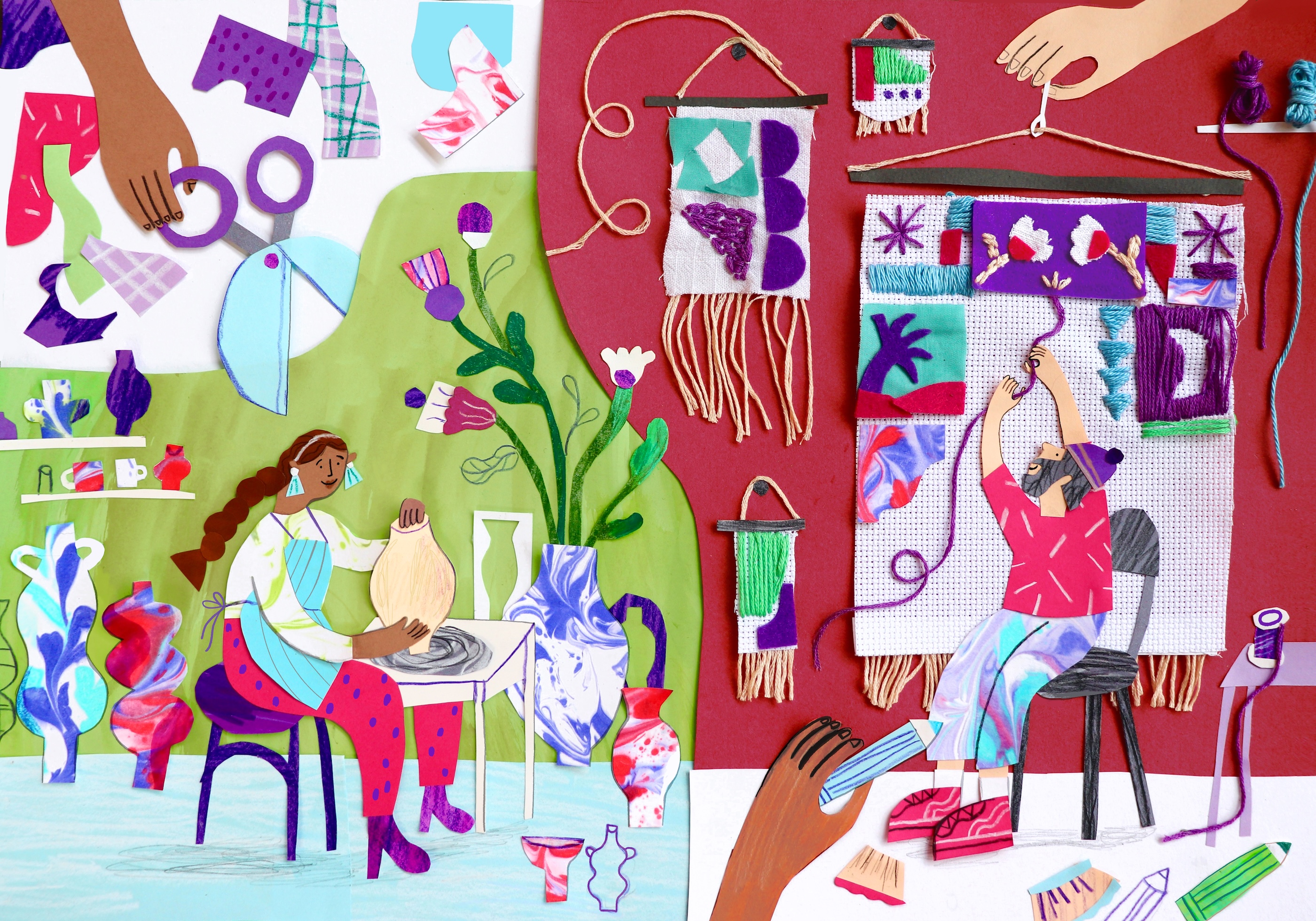
What is the appeal of handmade illustration?
Handmade or analogue approaches may carry connotations of craftsmanship, heritage, luxury, attention to detail. Or, they might be seen as grounded, tangible and sensory, perhaps more authentic or able to connect with a viewer on a personal level.
If digital tools are developing an association with ease or convention, by contrast a technically impressive handmade approach could prompt admiration or curiosity.
As with any area of illustration, it’s important to focus your attention on potential clients or customers that align with the kind of work you make. Take time to research potential clients and look at the kind of work they typically commission before reaching out.
Practical considerations
You may need to invest in good quality equipment, and materials that require safe storage, and appropriate space to work.
It will be important to consider how the work will translate to print or screen. Working on your photography skills can make a big impact, and you don’t necessarily need expensive equipment to produce a suitable image that can be shared with a client for reproduction.
Briefs
There isn’t a single commissioning area that will be appropriate for handmade illustration, though your individual approach and portfolio will influence the kinds of briefs you tend to attract. Handmade work can be found across corporate commissions, publishing, site-specific uses such as shop window displays.
It will be crucial to understand the format, dimensions and how the work will be adapted to print, screen or however it may be displayed. Always discuss technical issues with the client.
Deadlines
It can be that some handmade methods take more time than digital work – if this is true in your case, be sure to discuss deadlines and timings with the client.
If your process involves a point of no return, after which making changes and amendments becomes very difficult or requires starting a piece from scratch, be sure to communicate this. Ask that final rounds of feedback and amends should come before this.
Licensing and Contracts
Licensing and contracts will operate in much the same way as they do for any kind of illustration. However, if the physical work has to be held or stored by the client, perhaps for site-specific installation or window display, you may want to agree upon terms for this in the contract. Think carefully about transportation and possible damage, and consider arranging insurance.
It could be that documenting or recording the process itself forms part of the brief. If this is the case, be sure that the photos or videos you create are included in the licence and reflected in the fee.
There isn’t necessarily a substantial difference between handmade work and digital when it comes to licensing. In all cases, the fee should reflect the value of the licence.
It can be prudent to adapt the way you work for certain commissioning areas if they involve smaller licences and/or faster turnarounds. In these cases, consider whether you are able to simplify working processes without compromising on quality.
Selling Products
Handmade illustration may lend itself to other kinds of income, such as selling products, prints and original artworks. Factor in your time, and your overheads such as costs of facilities and materials, but also remember to consider the value of the piece. Look at how other illustrators or craftspeople price similar work.
If you are working with galleries or stockists, be aware their cut may be around 50%. This can be worthwhile, if you find a positive impact on sales, establishing connections and promoting the work further than you might be able to alone
Fairs and markets can be a way of gauging interest in the work, getting to see how other illustrators approach selling, and building more in-person connection with potential customers. Keep in mind the cost of the table, and make the most of it by displaying your work to its best.
AOI Members can explore the area of site specific Illustration in more depth in the How To Get Into Handmade Illustration publication written by Saskia Cameron.
Go here to read the Illustration for Gaming Basics
Go here to read the Fashion Illustration Basics
Go here to read the Publishing Season: Book Covers Basics
Go here to read the Site Specific Illustration Basics
Go here to read the Illustration for Children Basics
Go here to read the Branding Illustration Basics
Go here to read the Editorial Illustration Basics
AOI Members have access to all Inside Illustration content.
Members also have access to the AOI’s Pricing Calculator, which assists with quotes for a range of areas of illustration commissioning.
To help find clients, AOI produces regularly updated Client Directories at a reasonable price, with contacts for advertising and design, publishing and editorial companies.
AOI speaks directly to the commissioners and passes on information about the kind of work they’re looking for. Details include names, role, email addresses, address, socials and more.
The AOI would like to make resources accessible to all members. If you would like an alternative format please ask.