
Commissioner Insights: How to Develop Your Online Presence and Connect with Clients Members

Continue reading...
Enjoy unlimited access to all resources with an AOI membership
Become a Member Already a member? Log inAs well as actively reaching out to clients yourself, you need to ensure your work is visible and that your online presence will help attract the work you want to be doing.
But how do you know what a commissioner wants to see, and how do you build your online presence so you can put yourself in the best position to secure a commission?
With insights from clients experienced in working with illustrators at The New York Times, The Guardian, Nice and Serious and VCCP/Girl&Bear, we break down the essentials you need to know about building your online presence and how you can present your portfolio to its best advantage, so you can give your work its best chance for success.
A big thanks to all of the commissioners we spoke to for their valuable insights!
What for you goes into the process of choosing an illustrator for a project?
Kathy Lee (NY Times): It's important to read into the tone of the project and/or story. I'll usually look for an illustrator that has a level of confidence in their work; a clear, unique style that would drive the point of the headline, or the top of the story, to catch a reader's attention. I'll find a few artists that I like and then narrow down from there.
Sadie Devane (Nice and Serious): My first step as an art director is always to define the visual tone of a project. I?ll create moodboards early on to help the team align on direction. This includes references not only for style, but also the overall mood and energy of a project.
Once the tone is established, I start looking at illustrators whose work fits nicely in that visual world (or who I think could evolve into it). My considerations at this stage are whether their visual language supports the message we're aiming to communicate, how they handle narrative and composition, and their use of colour, line, and texture. I always try to champion new or underrepresented talent whenever the brief allows space for it.
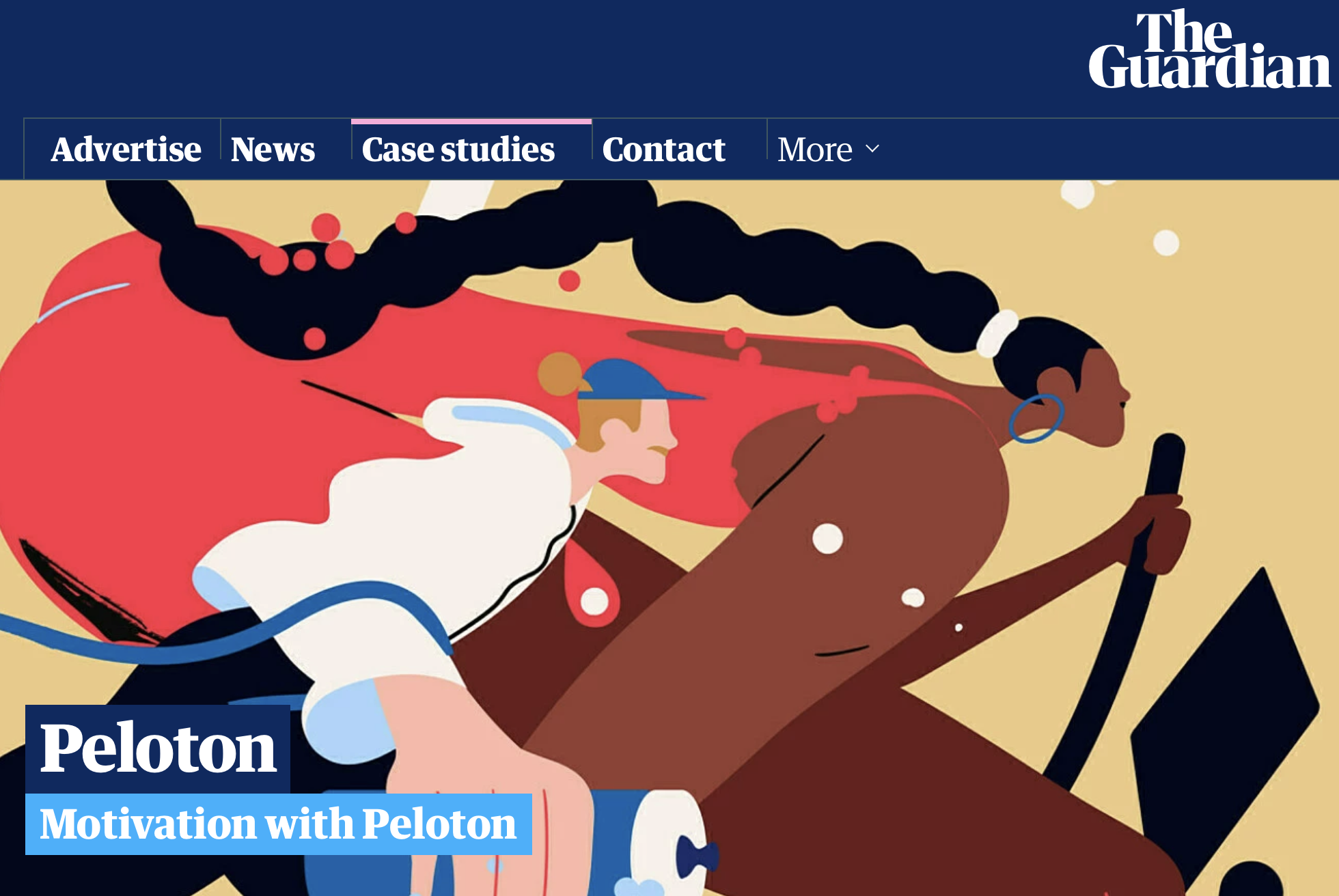
Anthony Huggins (The Guardian): It comes down to a variety of factors, but it all begins with the client?s brief. What message do we want to communicate, and in what tone? From there, we examine the client?s brand to uncover any insights that might guide the process, whether it?s the style of imagery they typically use, past illustrations, or subtle brand cues. It?s the combination of these elements that shapes the starting point for our work.
Ellen Webb (VCCP/Girl&Bear): I usually start with a guide from our creative team